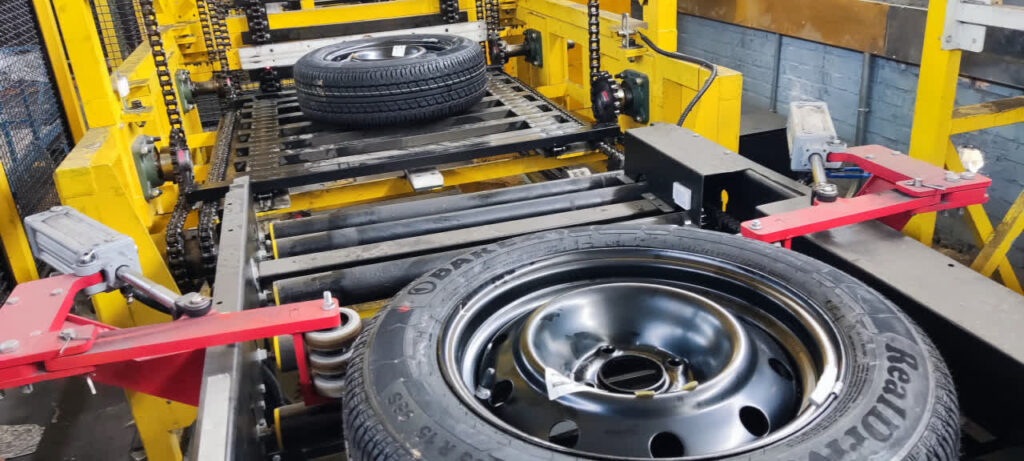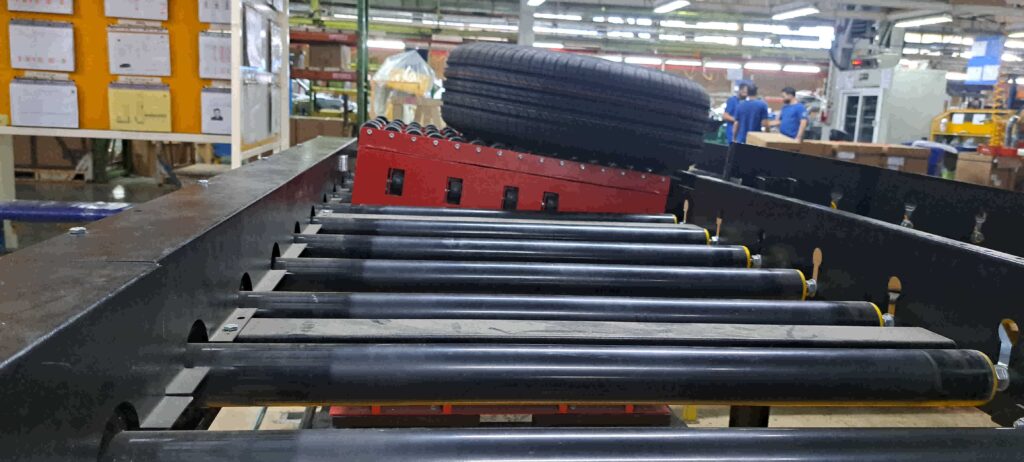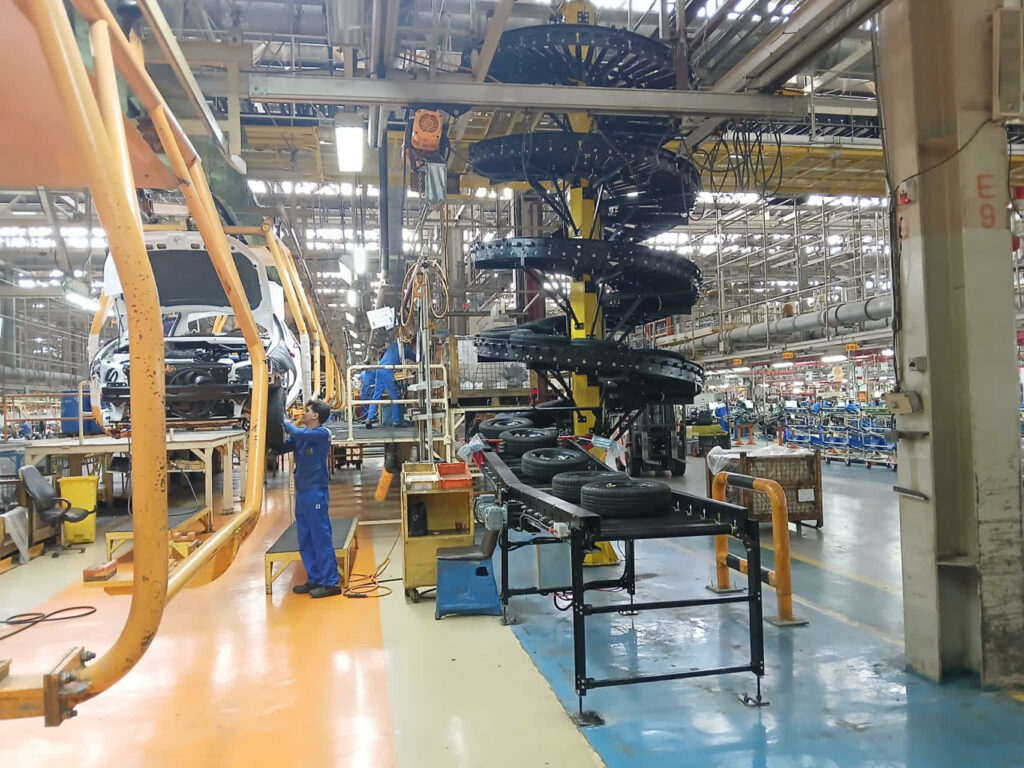



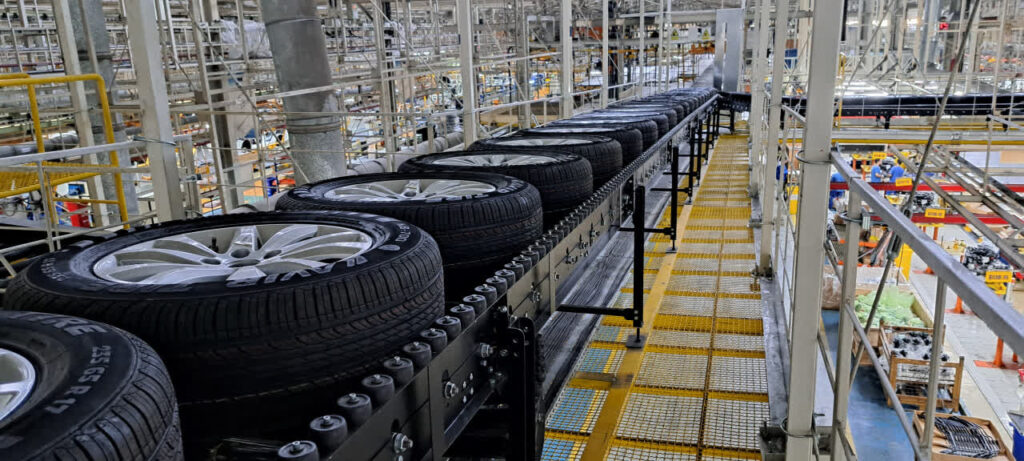
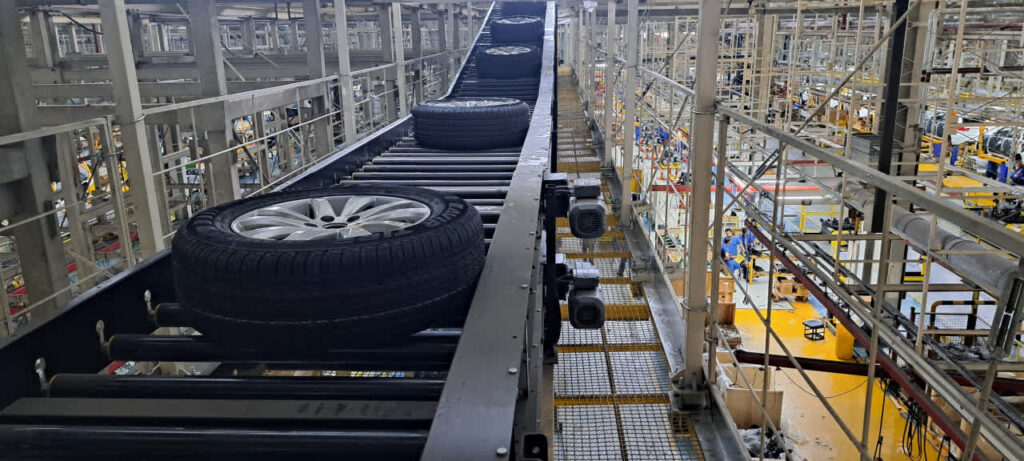
In this project, the design and manufacturing of a tire transfer system was carried out using two types of roller conveyors: powered and gravity. The main goal was to create a continuous, reliable, and low-cost path for transferring tires between various production stations and the warehouse. The powered conveyor was selected as a roller chain type to provide continuous and controllable movement on non-inclined paths. In contrast, on sections of the path with a suitable standard incline, gravity conveyors were used to allow movement without energy consumption, relying on the weight of the tires.
In the system design, special attention was paid to important principles such as safety, ease of maintenance, reduction of structural weight, and the ability for rapid disassembly. All components have been designed so that when relocation or layout changes are needed, they can be easily disassembled and reassembled without affecting the performance or structural strength. The selection of lightweight materials with high mechanical strength has allowed the structure to maintain sufficient resistance against static and dynamic loads while reducing weight.
One of the key points in the design process was the standardization of common components between the two types of conveyors. Frames, connections, and supporting parts were made as similar as possible to simplify manufacturing, installation, and spare parts storage. This approach has both helped reduce production costs and significantly reduced system assembly time.
From a functional perspective, both types of conveyors were designed based on ergonomic and industrial productivity principles to ensure smooth, safe, and damage-free tire flow. Additionally, considerations regarding ease of cleaning, user safety, and height adjustability were incorporated into the design to make system operation simple and stable in real production line conditions.
Overall, the implementation of this project resulted in a system with an engineered, lightweight, reliable, and economical structure that, while providing smooth tire transfer, significantly reduced maintenance and energy consumption costs.