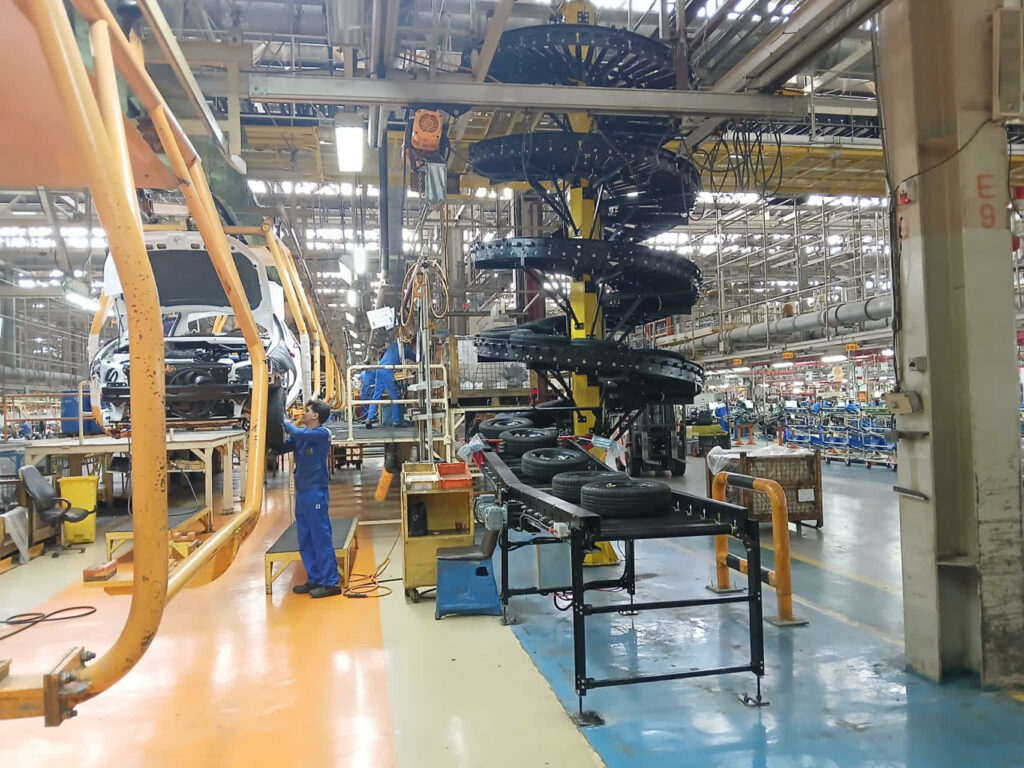



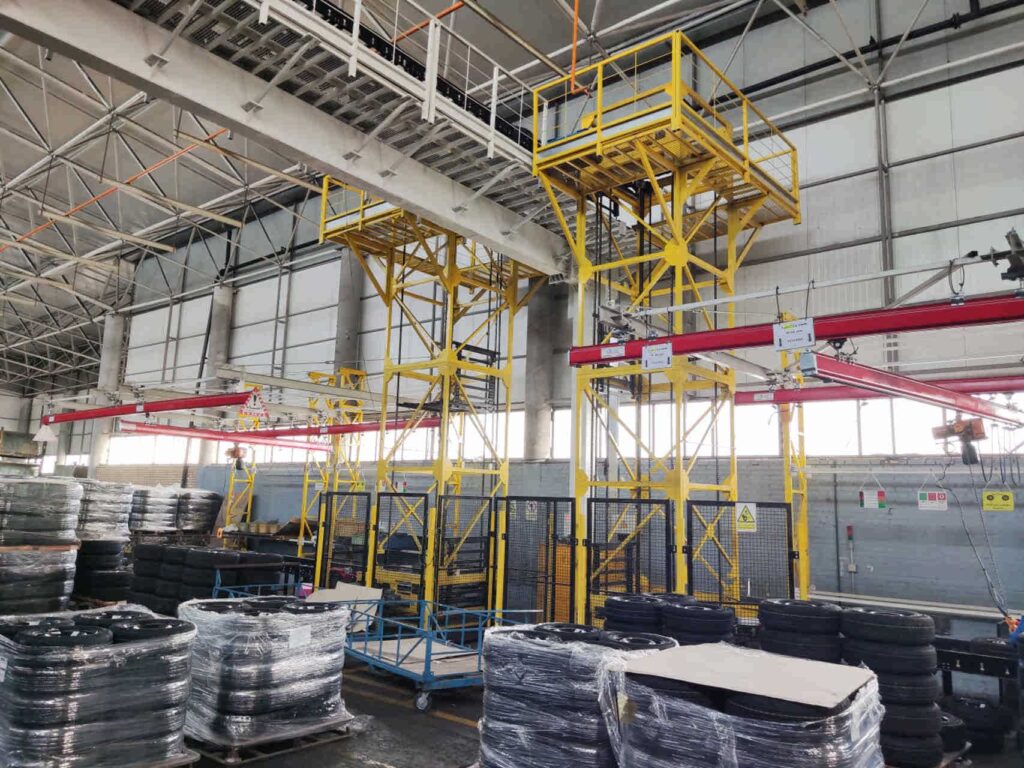
Two continuous lifts for transferring tires to a height of 8 meters, first of its kind manufactured in Iran, saving approximately 80 square meters of warehouse space
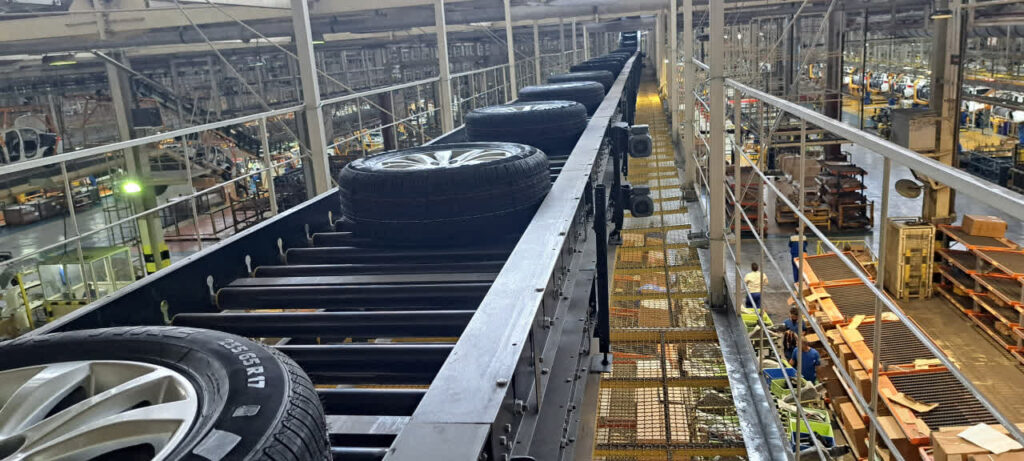
Motorized roller conveyors for transferring tires at heights of 6 to 8 meters above ground level across 2 floors for different products
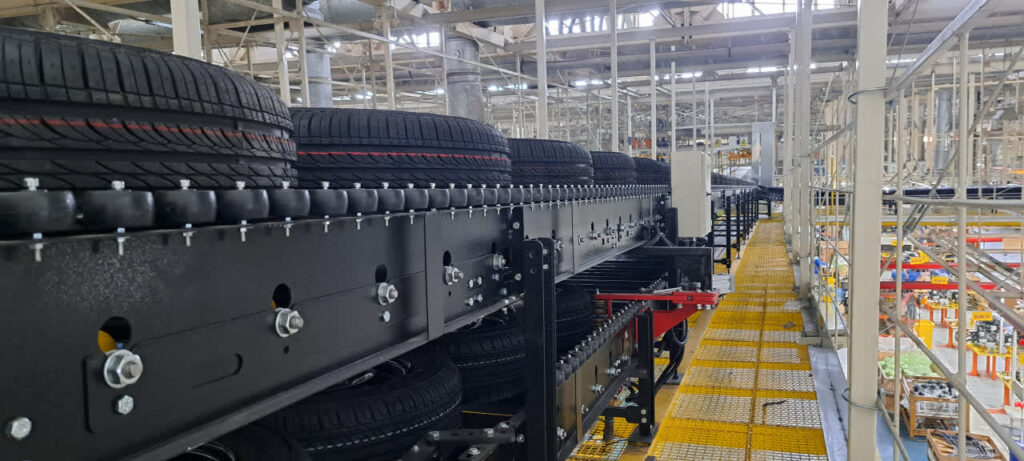
Inclined, non-motorized (gravity) roller conveyors on 2 levels at heights of 4 to 8 meters above ground level
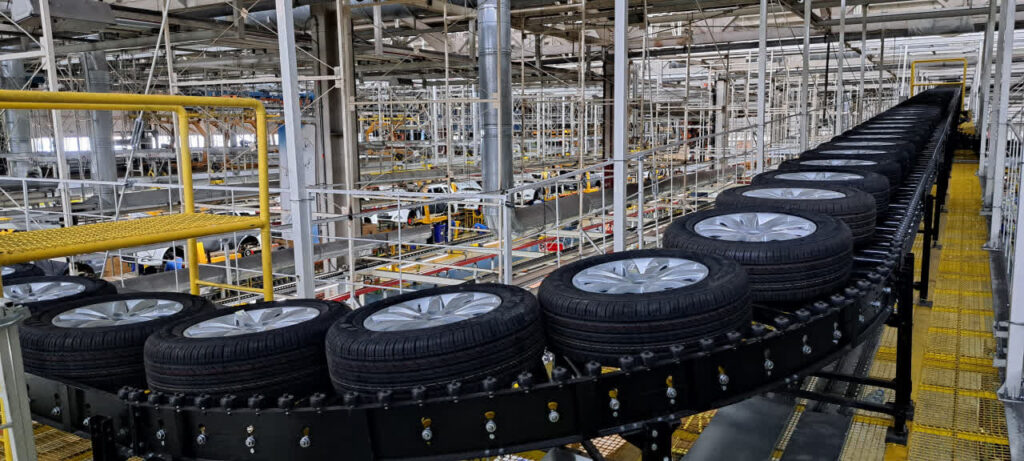
Inclined, non-motorized (gravity) roller conveyors with a 90-degree angle at heights of 4 to 5 meters above ground level
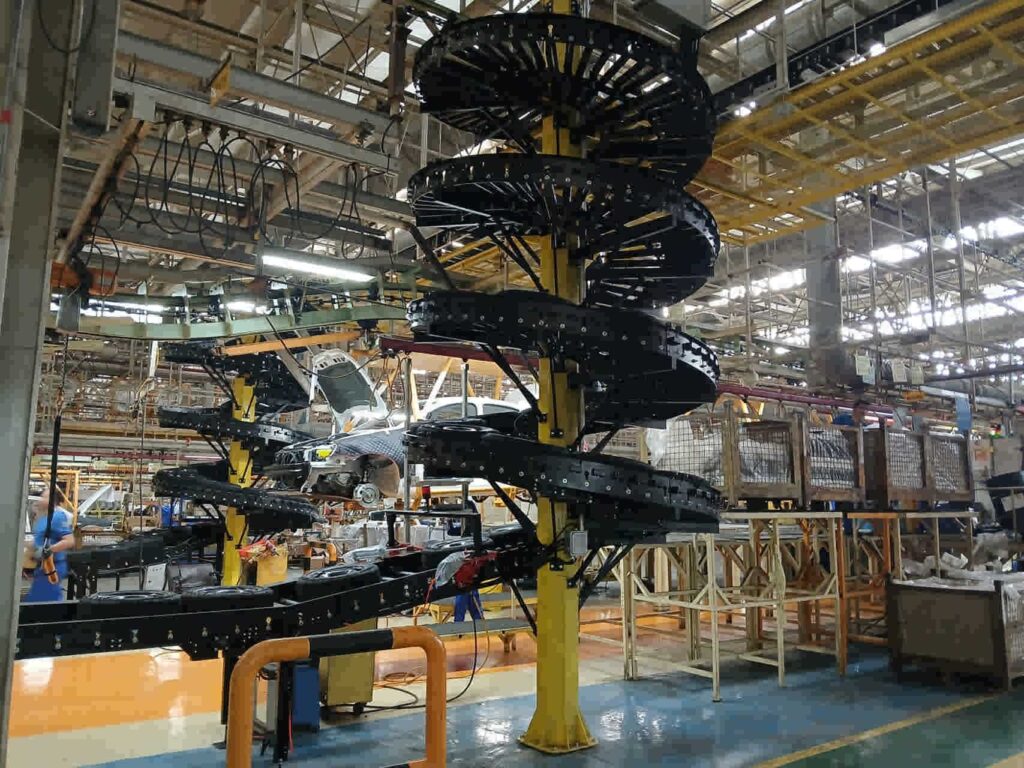
Spiral Roller Gravity
Conveyor – 2 units on either side of Assembly Line 1 at Iran Khodro Khorasan
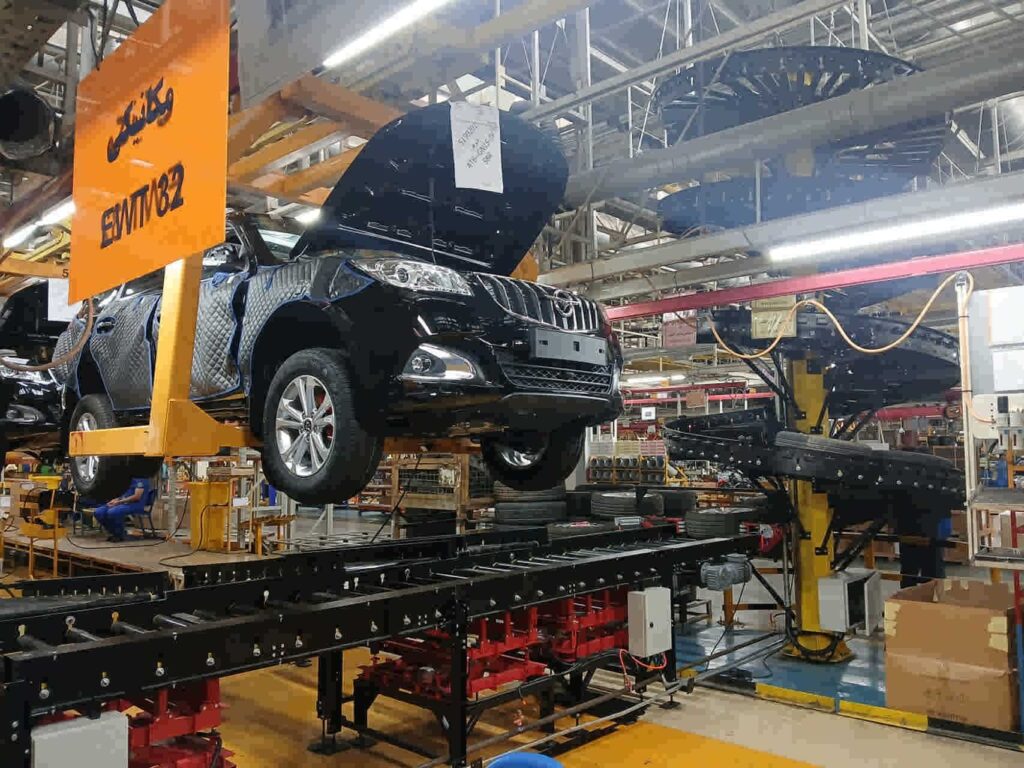
Spiral Roller Gravity Conveyor – Assembly Line 2 at Iran Khodro Khorasan
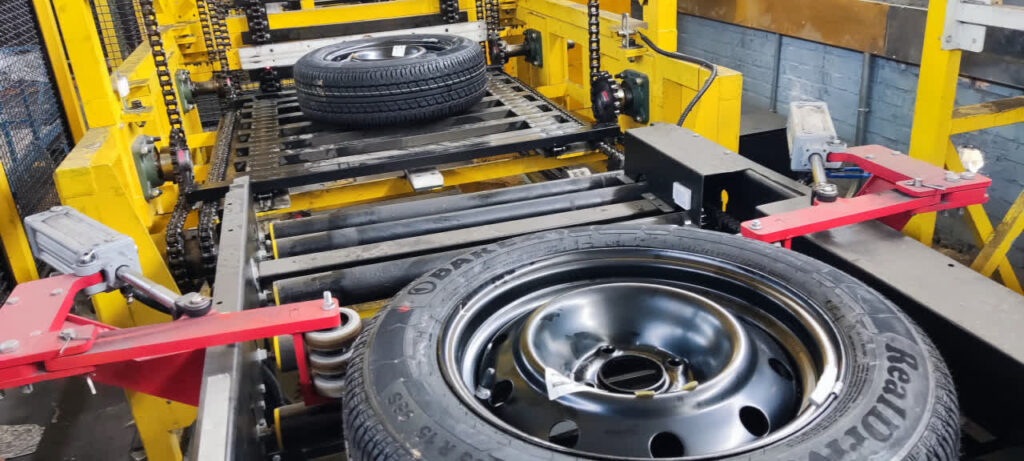
Pneumatic stopper and sequencing unit – implemented at 6 points of the tire transfer system
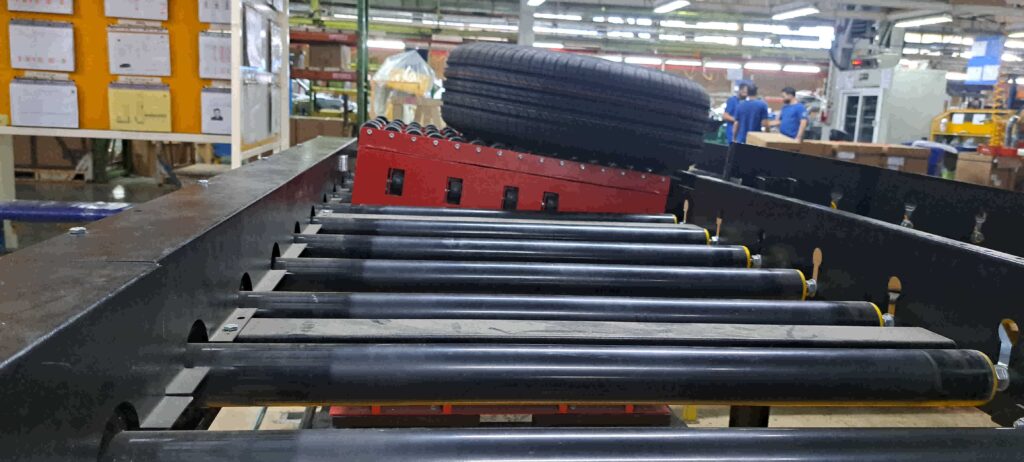
Pneumatic diverter and lift – used at 4 locations on the tire transfer line
This project was carried out with the objective of designing and implementing a fully automated system for transferring tires in automotive production lines. The execution was performed by Yekta Karamandan Development Aria Company and the system has been deployed on the production lines of Haima and Peugeot vehicles. The main goal of this project was to completely replace manual and forklift-based tire transfer with an automated, fast, and safe system.
Previously, tire movement was done using forklifts—a method that posed significant issues in terms of operational costs, safety risks (especially the potential for collisions with personnel), and reduced production speed. To address these challenges, a system was designed to perform tire transfer in a fully continuous, automated manner synchronized with the production line speed, while minimizing space requirements, energy consumption, and safety risks.
In this system, at the start of the line, an operator places tires onto the lower conveyor inlets. These inlets are designed separately for the Haima and Peugeot lines. Once a tire is placed, the conveyor moves and, using position sensors and control stoppers, the tires are sequentially fed into the Vertical Continuous Lifts (VCL). This process occurs simultaneously on both sides of the line, ensuring continuous workflow.
The tires are lifted by the VCL system to a height of approximately 6 meters and then enter the overhead section of the line. A standout feature of this lift is its minimal space footprint—occupying up to 90% less space compared to conventional inclined systems. It is worth noting that this technology was designed and built for the first time in Iran by Yekta Karamandan Development Aria Company.
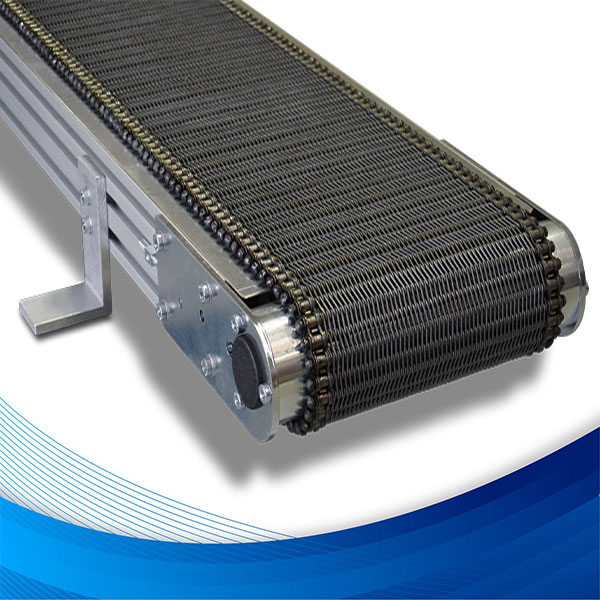
Along the rest of the path, tires are transported via a two-level conveyor to the assembly line. These two levels separate in the middle section, with each level directing the tire to its installation point. The transfer path combines powered roller conveyors for horizontal sections and gravity roller conveyors for suitably inclined sections, optimizing energy consumption and reducing mechanical complexity.
At the end of the Peugeot line path, a pneumatic diverter separates tires for the left and right sides of the vehicle. This equipment can operate simultaneously with the powered conveyor without requiring the line to stop. Additionally, with its modular design and speed adjustability, tires of different dimensions can be directed to branch paths.
In the final stage, tires are lowered via a helix conveyor (spiral gravity conveyor) and installed on the vehicle by an operator. On the Haima production line, this process is carried out with three separate diverters for left, right, and spare tires, ensuring each tire is directed precisely along its dedicated path.
All components of this system—including stoppers, diverters, continuous lifts, conveyors, and control systems—were fully designed and manufactured by Yekta Karamandan Development Aria Company. The outcome of this project is a system with high safety, faster transfer speed, reduced operational costs, and greater productivity in the automotive production line, serving as a successful example of indigenous technology development in Iran’s automotive industry.